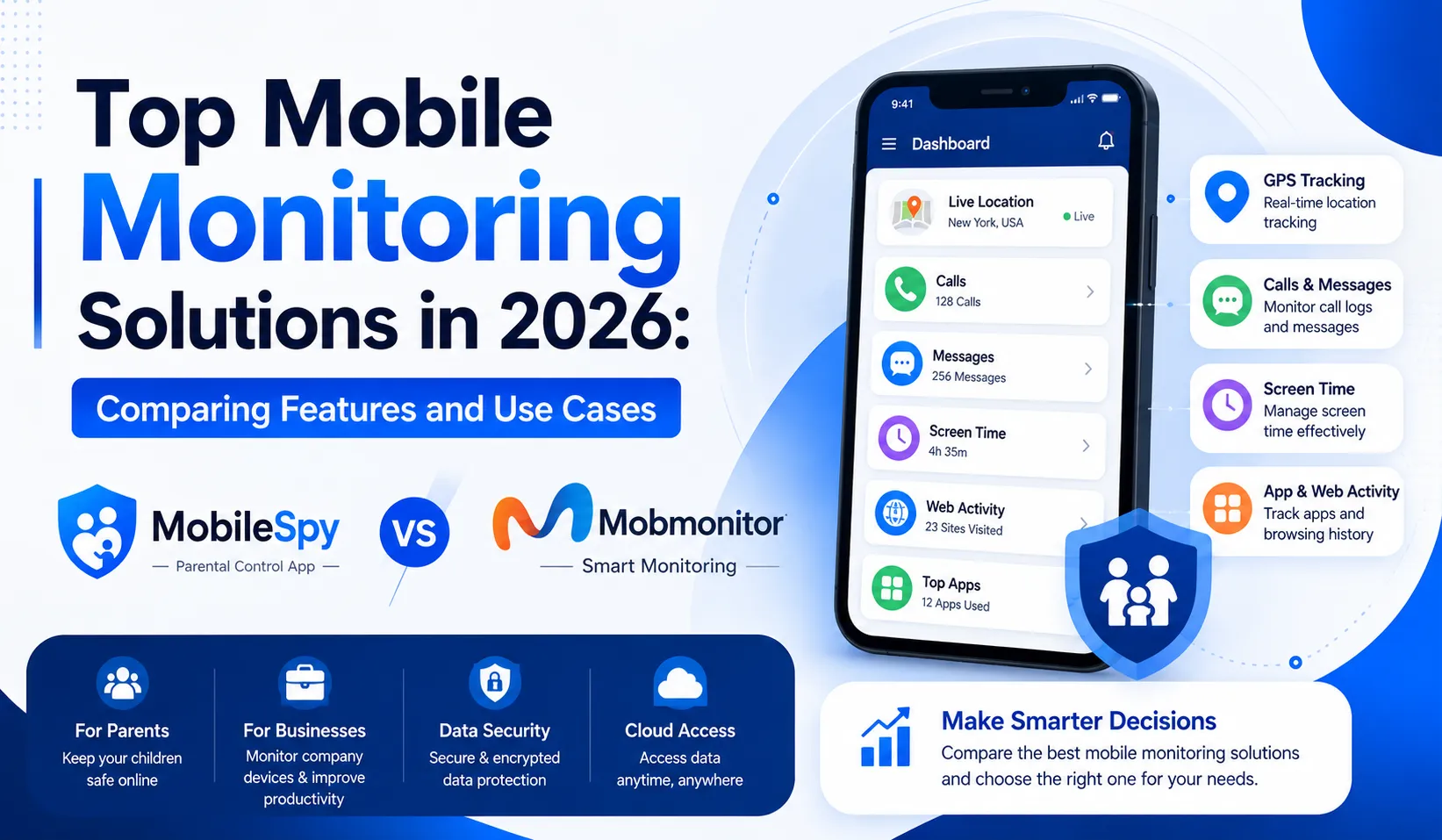
Top Mobile Monitoring Solutions in 2026: Comparing Features and Use Cases
Smartphones have become an essential part of daily life. From communication and online learning to banking and entertainment, almost everything now happens on mobile devices. While this connectivity offers convenience, it also introduces concerns related to online safety, screen time management, and device security.
As a result, many families and organizations are exploring mobile monitoring solutions to better understand device usage patterns and maintain a safer digital environment. In this guide, we compare some of the leading mobile monitoring App in 2026, discuss their features, and explain which use cases they may be suitable for.
Why Mobile Monitoring Matters in 2026
The average smartphone user spends several hours each day on mobile applications, messaging platforms, and social media networks. Parents often seek ways to encourage healthier digital habits, while businesses may need tools that help manage company-owned devices.
Common search terms users look for include:
- Best mobile monitoring app in 2026
- Phone activity tracker
- GPS phone tracker
- Screen time management apps
- Mobile device monitoring software
- Family safety apps
- Employee device management tools
- Android monitoring solutions
Modern monitoring platforms are designed to provide insights into device usage while promoting responsible and transparent use.
Key Features to Look for in a Mobile Monitoring Solution
1. GPS Location Tracking
Location monitoring remains one of the most requested features among users.
Benefits include:
- Viewing recent location history
- Receiving geofence alerts
- Checking travel routes
- Locating misplaced devices
Real-time GPS tracking can be especially useful for families who want to know whether children arrived safely at school or home.
2. Call and Message Activity Logs
Many solutions provide access to communication records stored on the device.
Features may include:
- Incoming and outgoing call details
- Contact information
- SMS activity summaries
- Call duration reports
These records can help users understand communication patterns and identify unusual activity.
3. Screen Time Monitoring
Excessive smartphone usage has become a growing concern.
Screen time tools allow users to:
- Review app usage statistics
- Identify frequently used applications
- Set daily usage limits
- Encourage healthier digital habits
For parents, these insights can support discussions about balanced technology use.
4. Social Media Insights
Social networking applications continue to dominate mobile usage.
Some monitoring platforms provide visibility into app activity involving services such as:
- Facebook Messenger
- Telegram
- Snapchat
Users should always ensure that monitoring practices comply with local regulations and are conducted with appropriate authorization.
5. Remote Device Management
Advanced monitoring systems offer additional management capabilities.
Examples include:
- Remote screenshots
- Device status information
- Battery monitoring
- Internet usage reports
- File management tools
These features are often useful for organizations managing company-issued devices.
Comparing Popular Mobile Monitoring Solutions
Several platforms have gained attention in 2026 due to their diverse feature sets.
Mobmonitor
Mobmonitor focuses on providing a streamlined monitoring experience for Android users.
Key highlights include:
- GPS location history
- Call activity records
- SMS monitoring
- Browser activity insights
- User-friendly dashboard
- Cloud-based access
Mobmonitor can be suitable for families looking for an easy-to-use monitoring platform with essential tracking capabilities.
MobileSpy.cloud
MobileSpy.cloud is designed for users seeking cloud-based monitoring features and centralized access to device information.
Popular capabilities include:
- Location tracking
- Communication logs
- Device activity reports
- App usage monitoring
- Web-based control panel
Its cloud architecture allows users to review collected information from virtually anywhere with an internet connection.
Family Safety Applications
Some users prefer family-oriented solutions that emphasize transparency and screen time management.
Typical features include:
- Content filtering
- Safe browsing tools
- App approval systems
- Usage scheduling
- Family location sharing
These tools are generally aimed at helping parents build healthier digital habits rather than extensive activity tracking.
Business Device Monitoring Platforms
Companies managing multiple smartphones may require enterprise-level solutions.
Business-focused platforms often provide:
- Fleet management dashboards
- Compliance reports
- Productivity analytics
- Remote device locking
- Security policy enforcement
Organizations should clearly communicate monitoring policies to employees and follow applicable workplace regulations.
Choosing the Right Mobile Monitoring Software
Selecting the best solution depends largely on individual requirements.
For Parents
Parents may prioritize:
- GPS tracking
- Screen time reports
- App usage summaries
- Family-friendly controls
For Businesses
Companies often look for:
- Device management tools
- Productivity reports
- Security monitoring
- Multi-device support
For Personal Device Security
Individuals interested in protecting their own smartphones may prefer:
- Backup features
- Location history
- Browser monitoring
- Device status notifications
Benefits of Cloud-Based Monitoring Platforms
Cloud technology has transformed the monitoring software industry.
Advantages include:
Accessibility
Users can securely access reports through a browser without needing physical access to the monitored device.
Automatic Updates
Cloud-based services frequently update their infrastructure and introduce new capabilities.
Simplified Management
Information from multiple devices can be organized within a single dashboard.
Scalability
Additional devices can often be added without complex installations.
Privacy and Responsible Monitoring
Privacy remains one of the most important considerations when using monitoring software.
Users should keep the following recommendations in mind:
- Always comply with local laws and regulations.
- Monitor devices only with appropriate consent and authorization.
- Inform family members or employees when monitoring is taking place.
- Use collected information responsibly and securely.
Ethical monitoring practices help maintain trust while still providing valuable insights into device usage.
Mobile Monitoring Trends for 2026
The industry continues to evolve rapidly.
Several emerging trends are expected to shape mobile monitoring solutions throughout 2026.
Artificial Intelligence Integration
AI-powered systems can analyze activity patterns and generate meaningful summaries instead of simply displaying raw dat
Improved Battery Efficiency
Newer applications are becoming more optimized and consume fewer device resources.
Enhanced Security Measures
Developers are increasingly implementing stronger encryption standards to protect user information.
Cross-Platform Compatibility
Future solutions may support seamless monitoring across smartphones, tablets, laptops, and wearable devices.
Final Thoughts
Mobile monitoring app have become valuable tools for families, businesses, and individuals seeking better visibility into smartphone usage. Whether your priority is managing screen time, reviewing communication activity, tracking locations, or securing company devices, choosing the right platform requires careful evaluation of features and intended use cases.
Solutions such as Mobmonitor and MobileSpy.cloud demonstrate how cloud-based technologies can simplify device management and provide useful insights through centralized dashboards. As digital lifestyles continue to expand, responsible and transparent monitoring practices will remain an important part of maintaining online safety and promoting healthier technology habits.